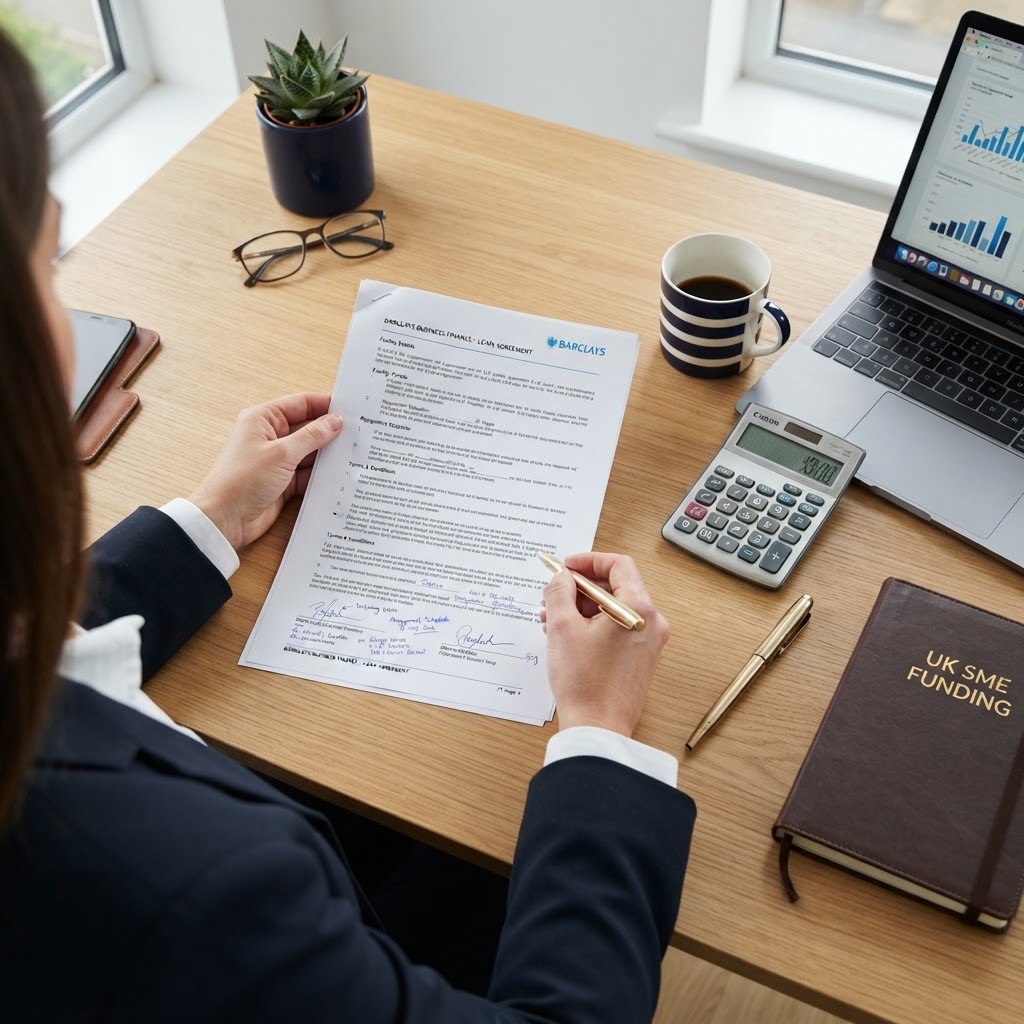
Borrowing money for your business always comes with a fundamental question attached: do you put up an asset as security, or do you borrow on the strength of your business alone? The answer affects everything from the interest rate you are offered to how quickly you can access funds and what happens if things go wrong.
Neither option is universally better. The right choice depends on your financial position, the purpose of the borrowing, your appetite for risk, and the assets your business holds. Understanding how each structure works will put you in a much stronger position when you sit down to compare lenders.
What Is a Secured Business Loan?
A secured business loan is one where the lender takes a charge over an asset as collateral. If you default, the lender has a legal right to recover the debt by seizing and selling that asset.
Common forms of security include:
- Commercial or residential property (a legal charge or mortgage)
- Business assets such as plant, machinery, or vehicles
- A debenture over the whole business (a floating charge covering all assets)
- A personal guarantee backed by a director's personal property
Because the lender has a route to recoup its money, it carries less risk. That lower risk is typically reflected in lower interest rates and access to larger loan amounts, often stretching to several million pounds and over longer repayment terms.
What Is an Unsecured Business Loan?
An unsecured business loan requires no specific asset to be pledged. The lender assesses creditworthiness, trading history, turnover, and profitability, and lends on the basis of confidence in the business rather than a claim over its assets.
This makes unsecured lending faster and simpler. Many lenders can provide a decision within 24 to 48 hours and fund within days. Loan amounts typically range from around £1,000 up to £500,000, though some specialist lenders will go higher for well-established businesses.
The trade-off is cost. Without security, the lender takes on more risk and prices accordingly. Interest rates on unsecured loans are almost always higher than comparable secured products.
It is also worth noting that many unsecured business loans still require a personal guarantee from a director. This is not the same as a secured loan, but it does mean you may be personally liable if the business cannot repay.
Key Differences Side by Side
Here is a straightforward comparison to help frame the decision:
- Speed of funding: Unsecured loans are typically faster, often funded within days. Secured loans involve valuations and legal work, which takes longer.
- Loan size: Secured lending generally supports larger amounts. Unsecured lending suits smaller to mid-range requirements.
- Interest rate: Secured loans attract lower rates due to reduced lender risk. Unsecured rates are higher to compensate.
- Repayment term: Secured loans can run for five to twenty-five years depending on the asset. Unsecured terms are typically one to five years.
- Risk to your assets: Secured loans put specific assets at risk. Unsecured loans with personal guarantees put personal assets at risk if the guarantee is called.
- Eligibility: Unsecured lenders focus heavily on trading history and cash flow. Secured lenders also assess the value and quality of the collateral.
When a Secured Loan Makes More Sense
A secured loan tends to be the stronger option when you are borrowing a significant sum and want to keep repayment costs manageable over a longer period. Property development, acquiring commercial premises, funding a large equipment purchase, or refinancing existing debt are all situations where security can genuinely work in your favour.
If your business owns property or substantial assets and you are comfortable with the legal process involved, the lower rate and higher borrowing ceiling can make a material difference to your total cost of capital.
When an Unsecured Loan Makes More Sense
For shorter-term needs where speed matters, unsecured lending comes into its own. Bridging a cash flow gap, funding a marketing push ahead of a busy season, covering unexpected costs, or taking advantage of a time-sensitive opportunity are all scenarios where waiting weeks for a secured facility is simply not practical.
Unsecured loans also suit businesses that do not own significant assets but have strong, consistent revenue. A service-based business with reliable client income and clean accounts is exactly the kind of borrower that specialist unsecured lenders were designed for.
The Role of Personal Guarantees
Personal guarantees deserve particular attention. They are common across both secured and unsecured business lending, especially for limited companies where the lender cannot rely on the owners' personal credit profile without one.
Before signing a personal guarantee, read the terms carefully and consider taking independent legal advice. Understand whether it is a limited guarantee (capped at a specific amount) or an unlimited guarantee (covering the full outstanding balance plus costs). This distinction matters enormously if you ever need to call on it.
How Lender Criteria Vary
One of the most important things to understand about UK business lending is that there is no single market. Different lenders have different appetites for risk, different sector preferences, different minimum trading requirements, and different ways of assessing affordability.
High-street banks tend to have stricter criteria and longer processing times. Challenger banks and specialist lenders are often more flexible and faster, but their pricing varies considerably. A lender that is competitive for a three-year unsecured loan to a technology company may be far less attractive for a secured loan to a hospitality business.
This is precisely why comparing multiple lenders before committing matters. The difference in interest rate between the first offer you receive and the best available offer can translate into thousands of pounds over the life of a loan. Gathering several indicative terms before making a decision costs nothing and can save a significant amount.
The Bottom Line
Secured and unsecured business loans both have a legitimate place in a business owner's toolkit. The best choice is the one that matches your borrowing need, your timeline, your asset position, and the total cost you are willing to carry. Take time to understand the full terms of any offer, including any personal guarantees, charges, and early repayment conditions, before signing anything.